Dissecting Gemma 4: Architecture from the Ground Up
Part of the Paper × Code series — where we dissect papers and rebuild them from scratch.
Coming Soon. This post is currently being written. Check back soon for the full architectural dissection.
What We're Dissecting
Paper: Gemma 4 Technical Report
Authors: Google DeepMind (2025)
The architecture at a glance:
- Multiple variants: E2B, E4B, 26B-A4B (MoE), 31B (dense)
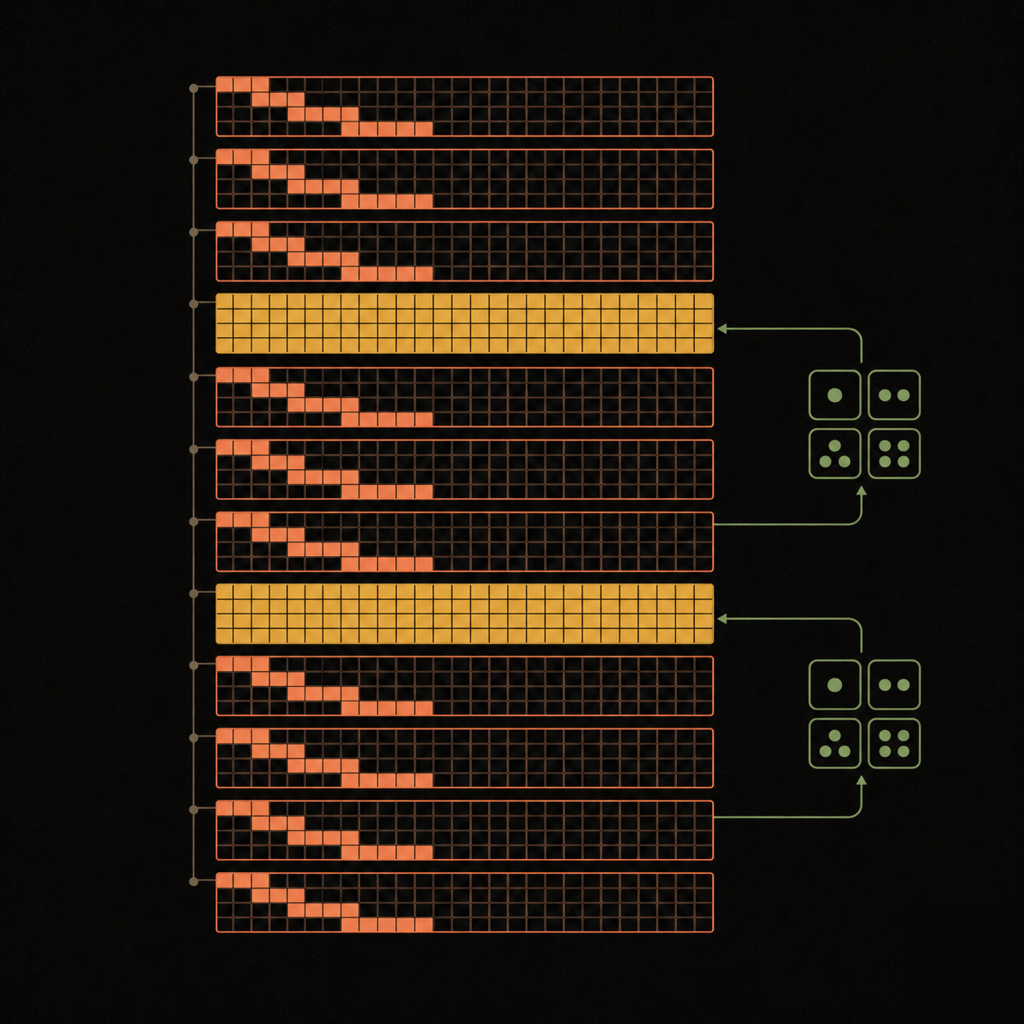
- Hybrid attention: sliding window (local) + full attention (global) layers
- Mixture of Experts in the 26B-A4B variant
- 256K context (larger variants)
- Builds on Gemma 3's proven hybrid pattern with tighter windows
We'll take each component apart, understand why it's there, and see how the full model composes.
Part 1: Hybrid Attention Design
Sliding Window Layers
TODO: Window sizes per variant (512 vs 1024). Why different scales need different windows. Rolling KV buffer implementation.
Global Attention Layers
TODO: Ratio of global to local. Which layers are global. How the "highway" pattern carries long-range information.
The Evolution from Gemma 3
TODO: What changed from Gemma 3's 1:5 ratio. Why tighter windows work at this scale. The interplay with longer context (128K → 256K).
Part 2: Mixture of Experts (26B-A4B)
Router Design
TODO: How tokens get routed to experts. Top-k selection. Load balancing.
Expert Architecture
TODO: Number of experts, active experts per token. FFN structure within each expert.
When MoE Meets Hybrid Attention
TODO: How MoE layers interact with the hybrid attention pattern. Which layers are MoE vs dense.
Part 3: The Dense Variant (31B)
Architectural Choices
TODO: How the 31B dense model differs from the MoE variant. Attention configuration. FFN sizing.
Performance Tradeoffs
TODO: When to choose dense vs MoE. Serving considerations. Quality comparisons.
Part 4: Training and Scaling
Training Infrastructure
TODO: Data, compute, training details from the report.
Scaling Decisions
TODO: Why these specific model sizes. The E2B/E4B variants for edge deployment.
Key Takeaways
TODO: What practitioners should take from Gemma 4's design. Reusable patterns at smaller scales. How it compares to DeepSeek-V4 and Qwen 3 Next.